New Zealand's glaciers are in the Southern Alps. The three most visited are the Tasman Glacier near Aoraki/Mount Cook, the country's longest, and the Franz Josef and Fox glaciers on the West Coast. All are retreating. Walking onto Franz Josef ended in 2012, so the usual way onto the West Coast ice is now a guided heli-hike.
A late-1970s survey counted over 3,000 glaciers larger than a hectare in the Southern Alps. Three are easy to visit: the Tasman Glacier beside Aoraki/Mount Cook, the longest in the country, and the Franz Josef and Fox glaciers on the West Coast. All three are retreating, and that has changed how you see them.
On the West Coast glaciers, the change is complete. You can no longer walk from the valley floor onto Franz Josef: that ended in 2012. Getting onto the ice now means a helicopter.
The glaciers you can visit
| Glacier |
Where |
How you see it |
Getting onto the ice |
| Haupapa / Tasman |
Aoraki/Mount Cook National Park, Tasman Valley |
Tasman Glacier View Track: about 15 min one way, 300+ steps |
Boat trips on Tasman Lake; ski-plane and helicopter landings on the upper glacier |
| Franz Josef / Kā Roimata o Hine Hukatere |
Westland Tai Poutini National Park |
Valley walk from the Glacier Access Road car park, when open |
Guided heli-hikes only |
| Fox / Te Moeka o Tuawe |
Westland Tai Poutini National Park |
South Side walkway: about 40 min to the first viewpoint |
Guided heli-hikes only |
| Hooker |
Aoraki/Mount Cook National Park |
End of the Hooker Valley Track; icebergs on Hooker Lake in summer |
Not offered |
| Rob Roy |
Mount Aspiring National Park |
Rob Roy Glacier Track: 10 km, 3 to 4 h return |
Not offered |
Checked November 2026 against DOC track pages. Glacier valley tracks close for floods, rockfall and ice collapse, so check DOC and the daily glacier access update on the Glacier Country site before you drive out.
Why the walks onto the ice stopped
Franz Josef and Fox have moved back and forth more than most glaciers. Both retreated several kilometres between 1934 and 1984, then advanced again for more than twenty years. Sources disagree on exactly when that advance ended: NIWA says Franz Josef advanced almost continuously from 1983 to 2008, while Te Ara gives slightly different end dates.
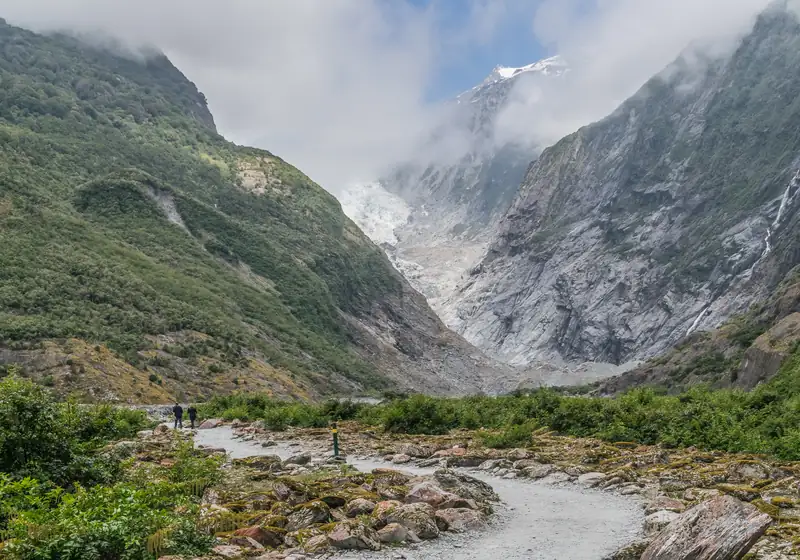
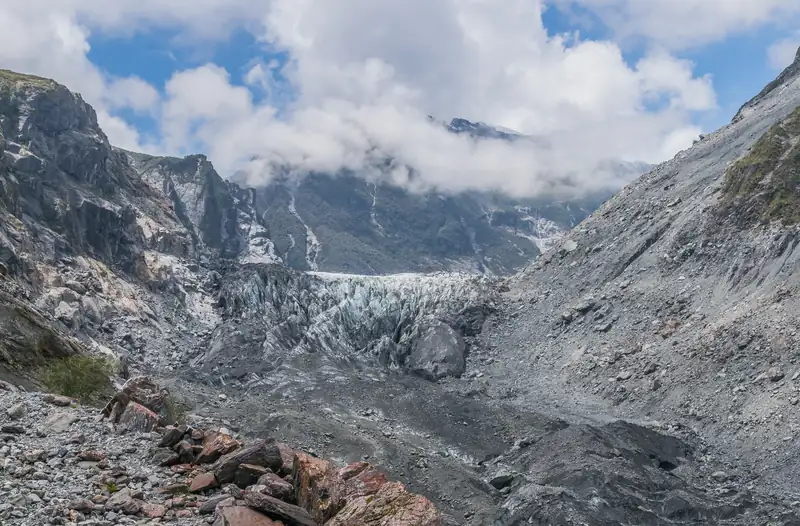
After that the retreat was fast. NIWA says Franz Josef has pulled back more than 1.5 km since 2008, and RNZ reported that Fox retreated about 300 m in a single year, from January 2014 to January 2015. As the ice thinned, the glacier fronts became unstable. News reports say walking access onto Franz Josef ended in 2012, and guiding companies moved to helicopters, which land groups on the ice higher up. Franz Josef Glacier Guides, for example, works with The Helicopter Line.
Fox has lost road access too. DOC abandoned the old north-side road up the valley in 2019 after flood damage. The way in now is the Fox Glacier South Side walkway, which starts 2 km south of the township across the Fox River bridge. DOC warns walkers not to go past the final viewpoint because of extreme flood hazard.
For most visitors, a heli-hike is now the way to stand on these glaciers. On the classic Franz Josef heli-hike you get up to two and a half hours of guided walking on the ice, with boots, crampons and waterproofs supplied. Compare the two villages on Franz Josef vs Fox Glacier, and see Franz Josef accommodation for where to stay.
The Tasman Glacier and its lake
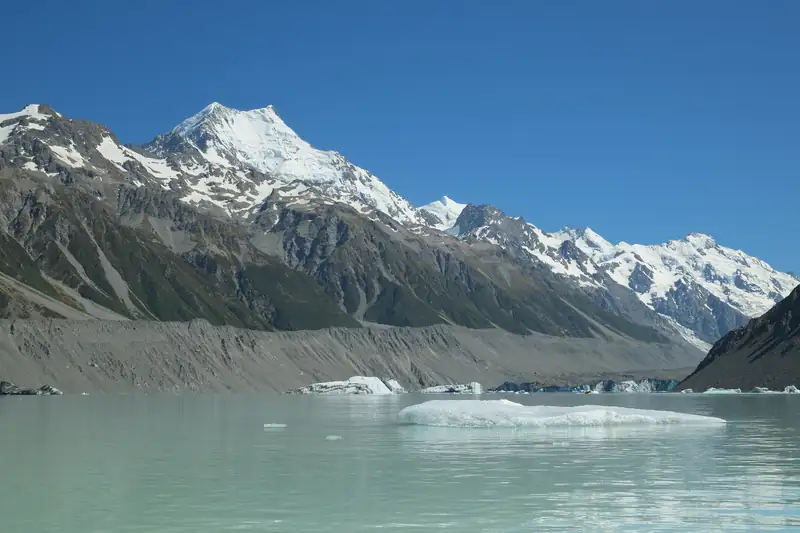
Haupapa / Tasman Glacier fills the Tasman Valley in Aoraki/Mount Cook National Park. DOC’s park page gives it as 23 km long, up to 3 km wide and about 101 km² in area, with ice about 600 m deep near the Hochstetter Icefall. Other sources give lengths from 22 km to 29 km, partly because they were measured at different times. The lower glacier is covered in rock, so from the road it looks more like a grey valley floor than ice.
What you notice instead is the lake. DOC says Tasman Lake did not exist until the 1970s and grows as the glacier melts. In summer it carries icebergs; in winter it freezes. The Tasman Glacier View Track, a short steep climb from the Tasman Valley road end, is the free way to look over it. Boat trips go out onto the lake itself; details are on the Tasman Glacier page.
Glaciers cover about 40 percent of Aoraki/Mount Cook National Park, so there is ice in almost every view from the Hooker and Tasman valleys. For the mountain above them, see Aoraki / Mount Cook.
How fast are New Zealand’s glaciers shrinking?
| Measure |
Figure |
Source |
| Glaciers counted |
Over 3,000 larger than 1 ha |
Late-1970s inventory (Chinn) |
| Glaciers gone since |
Around 200 |
RNZ report |
| Ice volume lost |
About 30 percent since the late 1970s |
NIWA estimate |
| Franz Josef retreat |
More than 1.5 km since 2008 |
NIWA |
| Fox retreat |
About 300 m, Jan 2014 to Jan 2015 |
RNZ |
The NIWA figures come from the end-of-summer snowline survey of the Southern Alps, first flown in 1977. The 2026 survey, fifty years after the first, found that late snow had given the glaciers a short break from rapid ice loss. One good season does not reverse the trend.
Why the glaciers are here at all
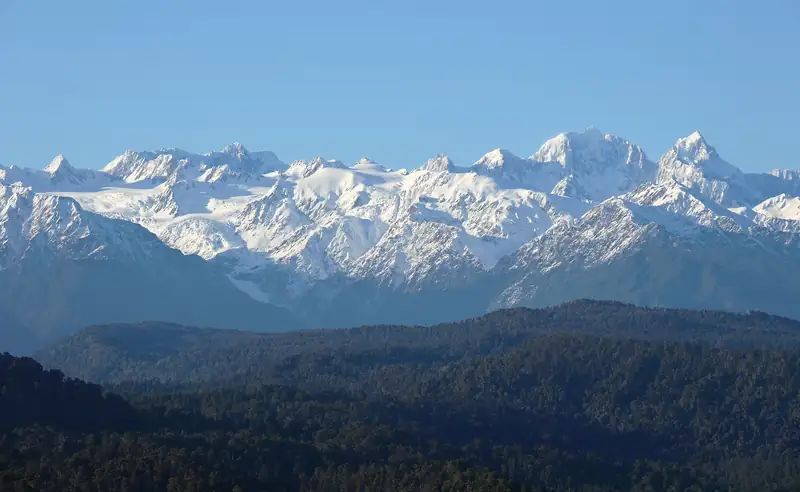
Snow, and a lot of it. The western side of the range is far wetter than the east. Rainfall is about 3,000 mm a year on the West Coast and about 15,000 mm near the Main Divide, but only about 1,000 mm 30 km east of it. High up, much of that falls as snow, which builds into the ice that feeds the glaciers.
Planning a glacier trip
- From Aoraki/Mount Cook: the Tasman Valley car park is about 10 minutes’ drive from the village, and Hooker Lake is about 1 h 30 min on foot. No road crosses the range to the West Coast glaciers; you drive round through Haast Pass.
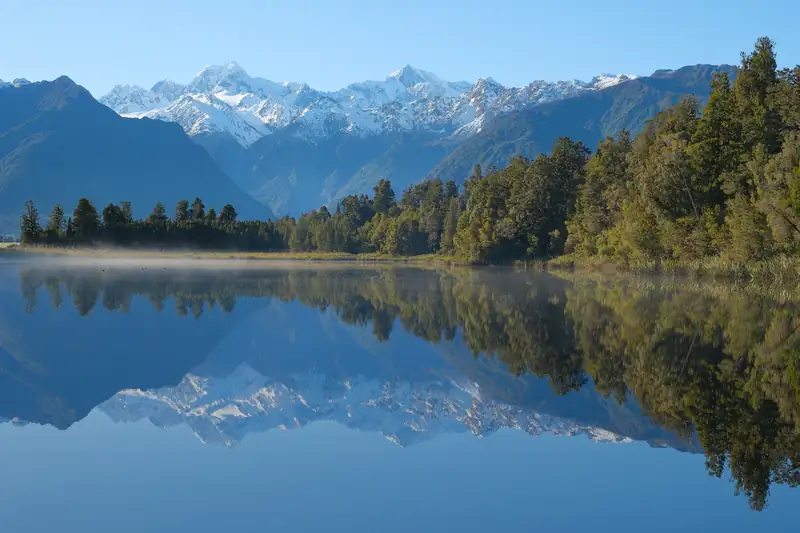
- On the West Coast: stay in Franz Josef or Fox Glacier. Lake Matheson, near Fox, is a 4.4 km loop of about 1 h 30 min with views of Aoraki and Mount Tasman.
- Parking: the Franz Josef Glacier car park is paid: NZ$2.50 per half hour, NZ$20 a day, card only (Checked November 2026). The Fox South Side car park is not on DOC’s paid list.
- Weather: heli-hikes and flights depend on the weather, and the West Coast is wet. Leave a spare day if the glacier is the reason you came.