For the South Island and its mountains, February and March are the best months: still summer-warm, February is the driest month at Aoraki/Mount Cook, and NZ schools are back. December and January have the longest days and the school summer holidays. Come June to September for skiing, and avoid early spring for alpine hikes.
The best time to visit New Zealand’s South Island for the mountains is February and March. The days are still long and warm, February is the driest month at Aoraki/Mount Cook, and New Zealand’s school summer holidays are over. Come December to March if hiking is the point. Come late June to September for skiing. The months to think twice about are September to mid-November if you want alpine hikes, because snow and avalanche risk linger on the high routes.
This guide covers the South Island and the Southern Alps. The seasons run the opposite way to Europe and North America: summer is December to February, winter is June to August.
New Zealand month by month
Temperatures are means (day and night averaged), not daytime highs. Rain is the monthly average. All figures are NIWA’s 1991-2020 climate normals.
| Month |
Season |
Mount Cook mean |
Mount Cook rain |
Queenstown mean |
Lake Tekapo rain |
What’s happening |
| January |
Summer |
14.6°C |
419 mm |
15.9°C |
38 mm |
Peak season; icebergs on Hooker and Tasman lakes; Mueller Hut peak rates |
| February |
Summer |
14.7°C |
272 mm |
15.6°C |
42 mm |
Driest month at Mount Cook; schools back |
| March |
Autumn |
12.4°C |
315 mm |
13.2°C |
29 mm |
Driest month at Tekapo; good hiking |
| April |
Autumn |
9.4°C |
337 mm |
9.8°C |
51 mm |
School holidays 10 to 26 April 2027; avalanche season starts on the Mueller Hut route |
| May |
Autumn |
6.2°C |
378 mm |
7.1°C |
72 mm |
Quiet; Mueller Hut bookings end 2 May; Rob Roy upper track in avalanche season |
| June |
Winter |
3.2°C |
291 mm |
4.1°C |
52 mm |
Ski fields open; shortest days |
| July |
Winter |
2.5°C |
289 mm |
3.4°C |
50 mm |
Coldest month; school holidays 3 to 18 July 2027 |
| August |
Winter |
4.1°C |
284 mm |
5.2°C |
38 mm |
Ski season; snow can close the Mount Cook and Arthur’s Pass roads |
| September |
Spring |
6.6°C |
361 mm |
7.7°C |
34 mm |
Snowmelt waterfalls; school holidays from 25 September 2027 |
| October |
Spring |
8.6°C |
394 mm |
9.9°C |
45 mm |
Mount Cook lily flowers; Roys Peak closed for lambing from 1 October |
| November |
Spring |
10.6°C |
368 mm |
11.9°C |
42 mm |
Roys Peak reopens 11 November; Mueller Hut bookings required from 2 November; busy season begins |
| December |
Summer |
12.8°C |
426 mm |
14.3°C |
41 mm |
Longest days; wettest month at Mount Cook; Isthmus Peak closed to 20 December |
Checked November 2026. Sources: NIWA (Earth Sciences New Zealand) mean monthly temperature and rainfall, 1991-2020; DOC track and hut pages; Ministry of Education 2027 term dates.
One thing the table makes clear: the two sides of the mountains get very different weather. Aoraki/Mount Cook Village averages about 4,100 mm of rain a year. Lake Tekapo, an hour and a quarter’s drive away, averages about 535 mm. The West Coast at Hokitika gets about 2,900 mm. A wet day in Mount Cook Village can be a dry one at Tekapo.
Summer: December to February
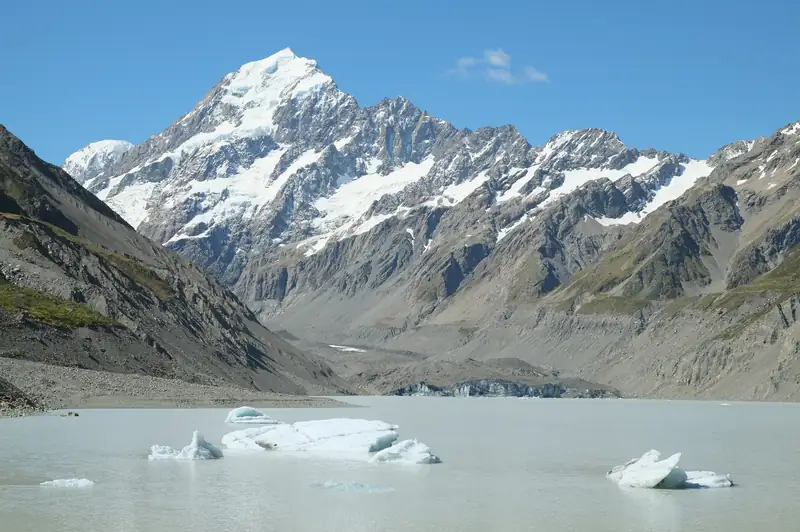
This is the easiest time for walking in the Alps. DOC says moderate tramping experience is enough for Mueller Hut in summer, and icebergs float on Hooker and Tasman lakes. Days are long: about 15.5 hours of daylight at Mount Cook in December, by our calculation from the latitude.
The cost is crowds. DOC calls November to April the busy season at popular walks like Lake Matheson and the Blue Pools, and Mueller Hut charges its peak rates from 1 December to 29 February. December is also Mount Cook’s wettest month on NIWA’s averages. Book huts, campsites and heli hikes early, and give yourself spare days for the weather.
Autumn: March to May
March is our favourite month for the South Island. It is a little cooler than February, Lake Tekapo has its driest month, and the summer holidays are over. From April, DOC warns of avalanche danger on the Mueller Hut route, and by May the Rob Roy Track’s upper section is in its avalanche season, so keep to lower walks late in autumn. May and early June fall between the hiking and ski seasons.
Winter: June to August
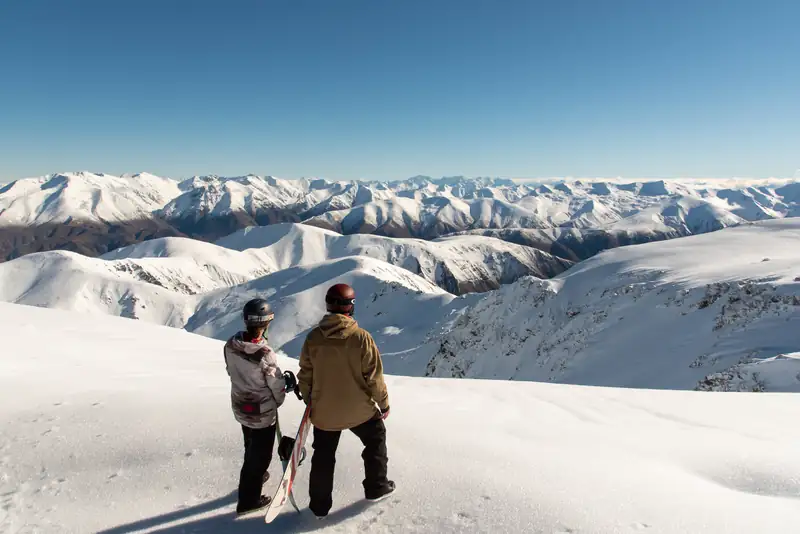
Winter is ski season, from about mid-June into September or October. See New Zealand ski resorts for dates. July is the coldest month, with a mean of 2.5°C at Mount Cook and 3.4°C in Queenstown.
Driving needs more care. NZTA advises carrying chains on Burkes Pass and Lindis Pass, and DOC notes that the roads to Mount Cook and over Arthur’s Pass can close in snow. Shaded parts of the Hooker Valley Track get icy, and DOC recommends microspikes. Daylight drops to about 8.9 hours in June. The reward is snowy peaks and long nights for stargazing at Lake Tekapo.
Spring: September to November
Spring is beautiful but awkward for hikers. Waterfalls such as Devils Punchbowl at Arthur’s Pass are at their best with snowmelt, and the Mount Cook lily, a giant buttercup, flowers from October. But avalanche danger on alpine routes lasts until mid-November, Roys Peak is closed for lambing from 1 October to 10 November, and Isthmus Peak closes for fawning from 20 November to 20 December. DOC warns that snow can fall in any month in the high country.
Best time for the West Coast glaciers
On the West Coast, rain is spread across the whole year. NIWA’s figures for Hokitika run from about 190 mm in February to about 285 mm in October, and DOC says Westland Tai Poutini National Park can get up to five metres a year near the mountains. Temperatures are milder than inland: a mean of 7.6°C in July and 16°C in February at Hokitika. So there is no dry season to wait for. Plan two nights at Franz Josef or Fox Glacier in any month, and book a heli hike early in your stay so you have a spare day if the weather turns.
Best time to visit Mount Cook
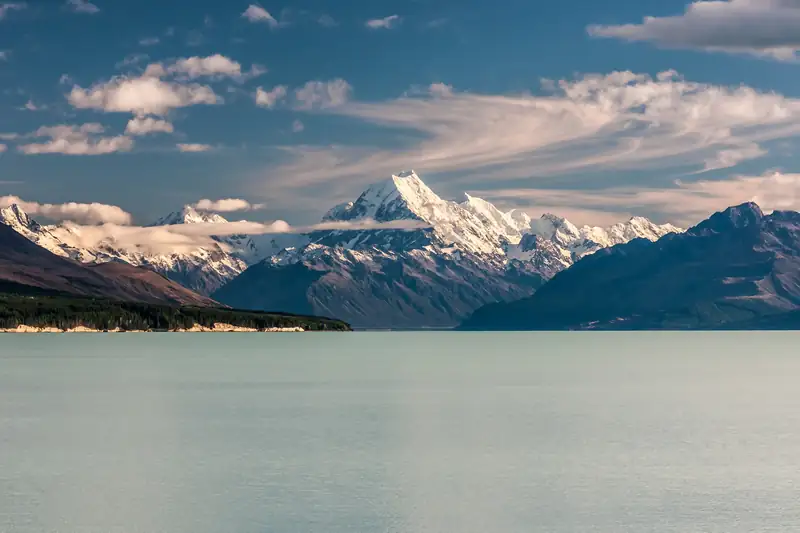
For Aoraki/Mount Cook, aim for December to March. You can walk the Hooker Valley Track in winter with microspikes, but summer is when the alpine walks are in reach without mountaineering skills. Whatever the month, plan two nights in or near the village. Rain falls there in every month, and the clear mornings are the ones you’ll remember.
Plan the route
Once you’ve picked your month, our South Island itinerary gives 7, 10 and 14-day routes, and Christchurch to Queenstown covers the main drive.